
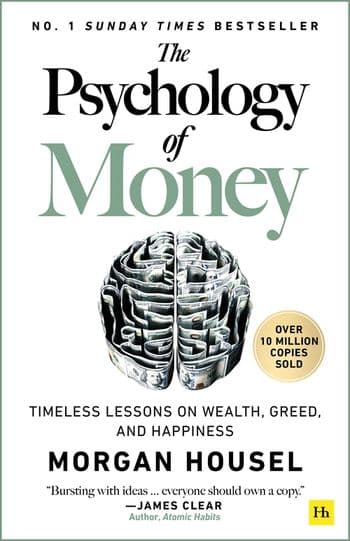
Someone you know gets a pay rise and immediately needs a more expensive lifestyle. Someone else earns less but seems calmer about money. The difference is not always visible in a salary figure. Morgan Housel's The Psychology of Money explores the experiences and emotions behind financial decisions. Its short chapters make a useful starting point for readers who find conventional finance books hard to get into. ## What are you measuring? Housel draws a distinction between visible spending and the resources a person keeps. It is easy to notice a new car; much harder to notice the decision not to buy it. That observation changes the question from whether you look successful to what your money allows you to do. Consider a hypothetical choice between a more expensive purchase and keeping flexibility for a career change. Neither choice can be judged from the price tag alone. What matters is the purpose it serves in that person's life. ## Make room for being wrong Another thread is uncertainty. An outcome can depend on skill and on circumstances outside a person's control. A success story is therefore worth examining rather than copying automatically. As a reading exercise, take one confident financial claim you have recently heard. What assumptions does it need? What would make it fail? Asking those questions is more useful than treating a memorable anecdote as a forecast. ## The part a book cannot decide for you This is a book about behaviour, not a guide to choosing a particular investment or navigating Indian tax rules. It will not tell you the right allocation for your circumstances, and its stories should not be mistaken for personalised advice. It also helps to read the discussion of behaviour without turning every financial difficulty into a failure of discipline. Income, family obligations and unexpected costs matter. Two people can make equally careful decisions with very different options available to them. ## A question to keep Before the next purchase made mainly to keep up with someone else, ask what you hope will change after buying it. Convenience? Enjoyment? Other people's opinion? A clear answer will not settle every decision, but it makes the trade-off more honest. That is where this book earns its place: it gives everyday money conversations a better set of questions. Source: Harriman House's book description and edition details for The Psychology of Money (harriman-house.com/psychologyofmoney).
Book ReviewIssue #46
The Psychology of Money: Why Enough Is Hard to Define
Morgan Housel shifts the conversation from clever investments to expectations, comparison and the choices money makes possible.
📅 May 30, 2026🕐 2 min read
FinancePsychologyInvesting