
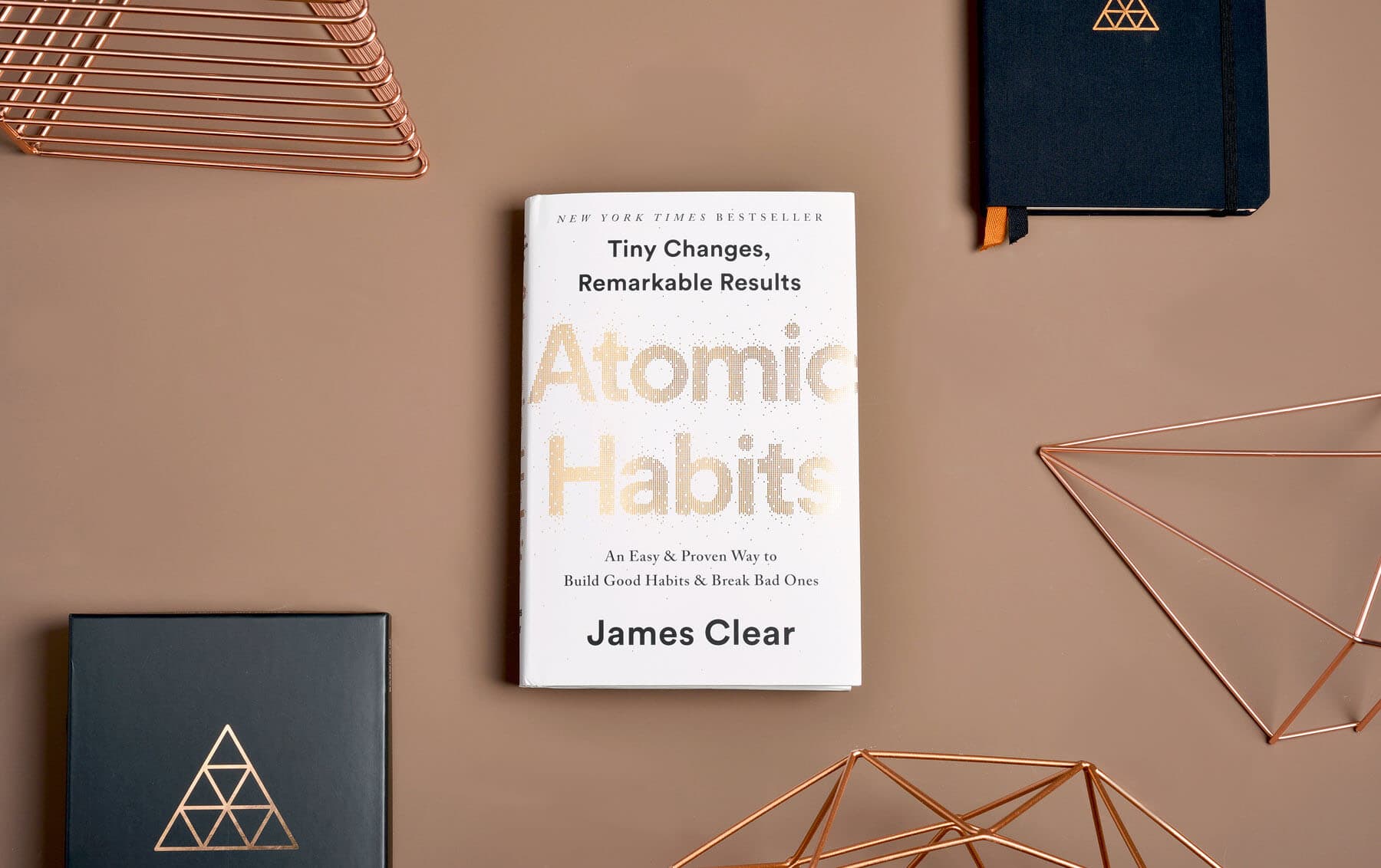
You can buy a notebook, download a habit tracker and still leave the book on your bedside table unopened. Atomic Habits is useful at precisely that point: when the intention is there but the ordinary Tuesday gets in the way. James Clear's approach is to make the next action easier to repeat. That sounds modest. It is also more useful than waiting to feel like a different person. ## Give the habit a place to happen Clear organises his advice around four changes: make a behaviour obvious, attractive, easy and satisfying. For a reading habit, that might mean putting a book beside the kettle, choosing something you actually want to read, starting with two pages and marking the session when you finish. Those examples are ways to apply the framework, not a prescription from the book. The useful question is where your own routine breaks down. If the book is always in another room, motivation may not be the problem. ## Start smaller than your ambition The two-minute rule is about making the beginning manageable. Opening your notes and writing one sentence is a starting ritual; it does not mean all worthwhile work can be completed in two minutes. Try attaching the action to something that already happens: after your morning tea, read a page. A reliable cue is often more practical than an ambitious target with no time or place attached. ## Where the advice needs perspective A familiar illustration in the book shows how a small daily improvement compounds mathematically. Real life does not improve along such a tidy curve. There are plateaus, setbacks and days when doing less is the sensible choice. Treat the illustration as encouragement to repeat useful actions, not a promise of a measurable transformation. There is another limit: a well-designed habit cannot remove every obstacle. Time, health, money and caring responsibilities affect what people can sustain. A routine should fit your circumstances rather than become another reason to feel behind. ## One experiment for this week Choose a habit you keep postponing. Make its first step small enough for a busy day, put the materials where you will use them and choose an existing routine as the cue. Try it for a week before adding difficulty. The most useful result is not a perfect streak. It is learning what makes the action easier to return to. Source notes: James Clear's explanation of the four laws (jamesclear.com/three-steps-habit-change) and the two-minute rule (jamesclear.com/how-to-stop-procrastinating).
Book ReviewIssue #47✦ Editor's Pick
Atomic Habits: Make the Next Good Habit Easier
A practical look at James Clear’s habit framework, with a reading routine you can try and a few limits worth keeping in mind.
📅 June 5, 2026🕐 2 min read
HabitsSelf-HelpProductivity