
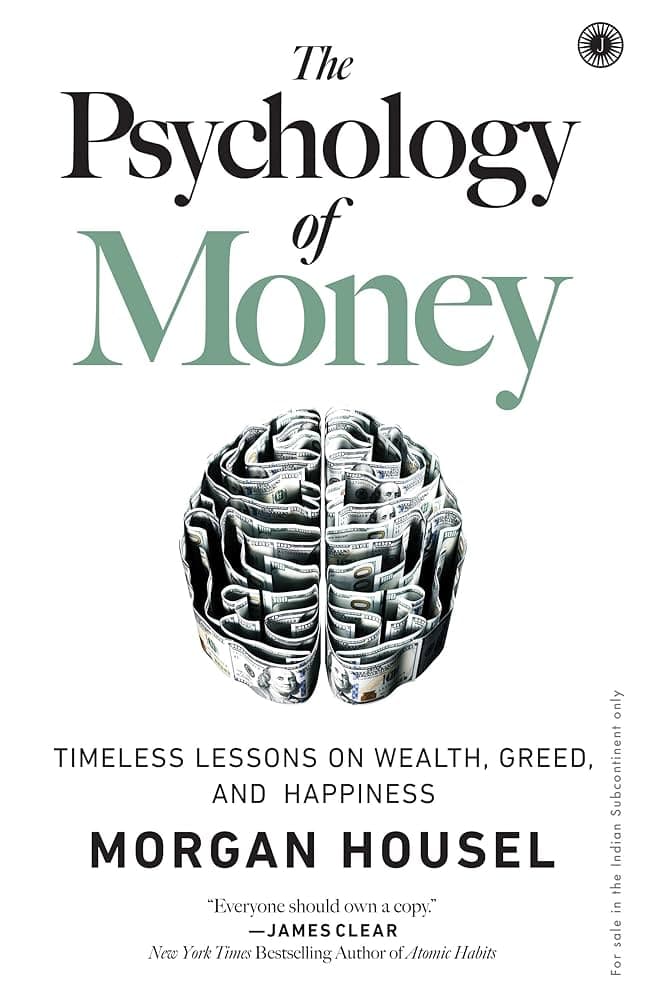
Our Review
The Psychology of Money is an approachable place to begin if financial writing usually makes you switch off. Morgan Housel builds his argument around stories and behaviour rather than asking the reader to start with a spreadsheet. That choice gives the book its reach. You do not need a portfolio to recognise the pull of comparison or the temptation to explain a good outcome entirely through skill. The chapters can start a useful conversation about what money is supposed to provide in the first place. The writing is also easy to consume too quickly. A memorable story can feel like proof, even when it is better understood as an illustration. It pays to stop occasionally and ask how broadly a lesson applies and what circumstances it assumes. Readers looking for a practical manual should know the boundary. This is not a guide to Indian tax rules, selecting funds or building a plan for a specific household. The discussion of behaviour can complement that work, but cannot replace it. Nor should the argument become a reason to judge people from the outside. Income, health and family commitments affect financial choices in ways a tidy anecdote may not show. Best for readers interested in why money decisions feel different in real life from how they look on paper. Read a chapter, discuss it with someone whose circumstances differ from yours, and notice where your answers diverge. The disagreement may be as useful as the lesson. Source: Harriman House, The Psychology of Money, paperback ISBN 9780857197689. The listed 256 pages refer to that edition.