Our Review
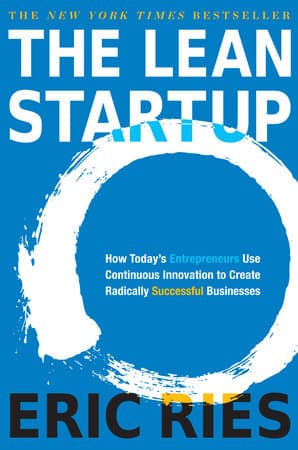
A new product can keep a team busy for months without answering its most important question: does anyone need this enough to use it? The Lean Startup asks founders to make that uncertainty part of the work, rather than treating it as something a polished launch will resolve. Eric Ries builds his approach around validated learning and the build-measure-learn feedback loop. The point is to turn an assumption into a test, observe what happens, and use that evidence to decide what comes next. A minimum viable product is useful when it helps answer a specific question; simply releasing something unfinished is not much of an experiment. The strongest practical takeaway is to write down the decision before building the test. What behaviour would support the idea? What result would make you change direction? Without those questions, almost any number can be made to sound encouraging after the fact. There are limits. A small early audience may not represent your eventual customers, and a quick experiment can miss problems that appear over time. Products involving safety, sensitive information or expensive infrastructure also need safeguards that cannot be reduced to a fast launch. The framework is a starting point for judgement, not a substitute for it. Read this if you are choosing what to build next or struggling to separate activity from progress. You do not need to adopt every piece of startup vocabulary. Start with one uncertain assumption and a modest, responsible way to test it. Source note: Eric Ries, The Lean Startup; the principles outlined at theleanstartup.com/principles.